1. Standard Definition & Scope
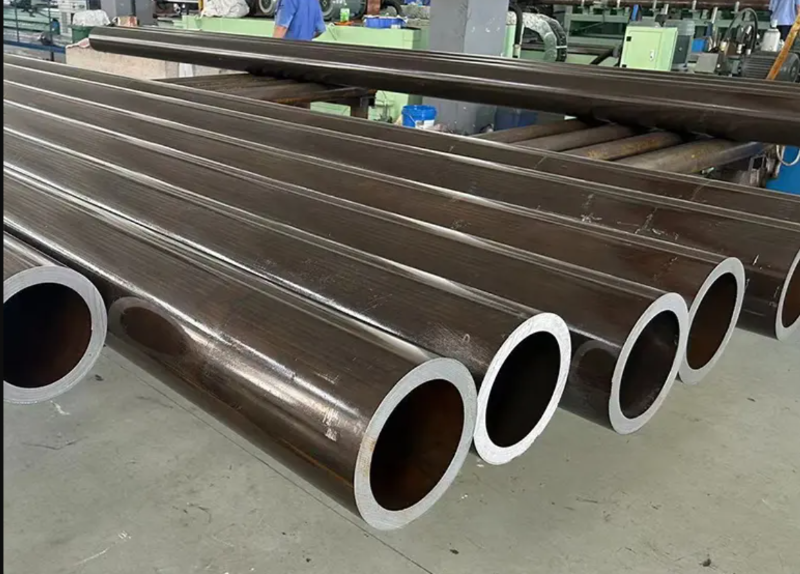
ASTM A519/A519M is the specification for seamless carbon and alloy steel mechanical tubing. Unlike pressure service pipes (ASTM A106, API 5L), this tubing is engineered for mechanical structural components rather than fluid transmission under high temperature or pressure. It covers hot-finished and cold-drawn seamless tubes for machining, cold forming, hydraulic machinery, automotive and general mechanical fabrication.
2. Main Steel Grades Classification
2.1 Carbon Steel Grades (Common for General Machinery)
- 1010, 1018, 1020, 1026: Low/medium carbon grades with good weldability and formability for low-load mechanical parts.
2.2 Alloy Steel Grades (For High-Strength Load-Bearing Parts)
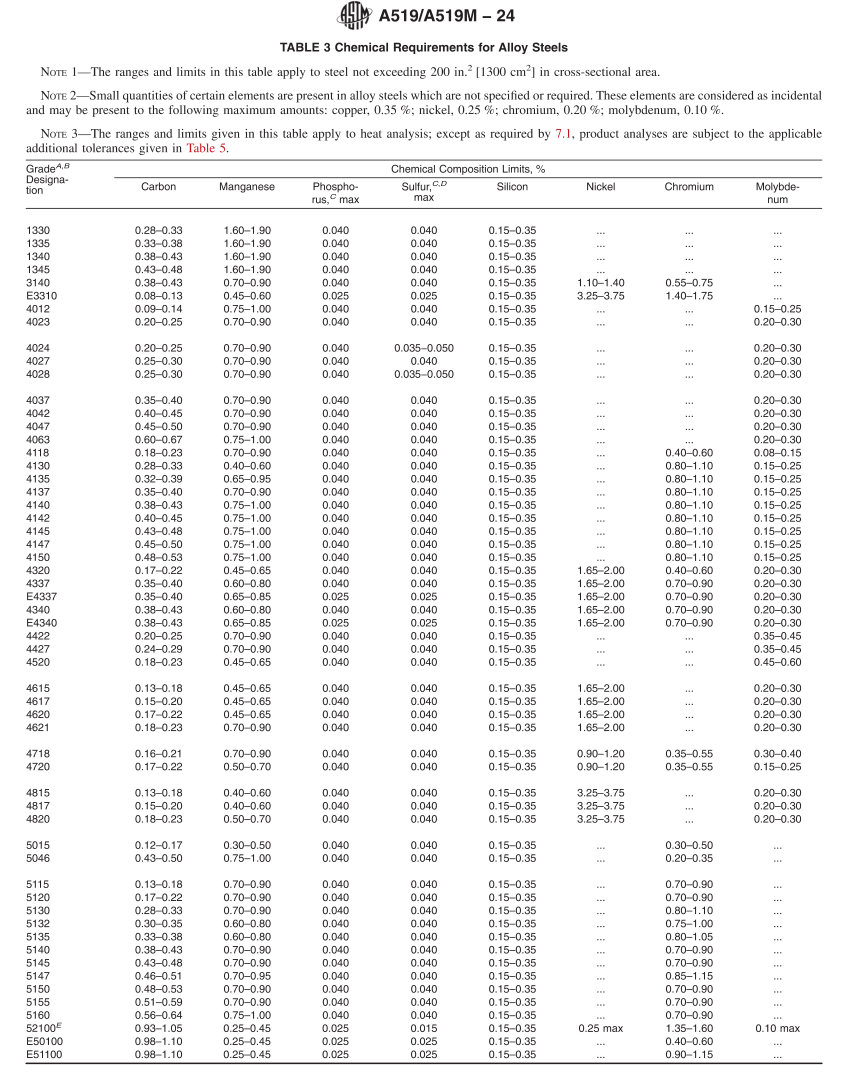
- 4130, 4140, 4340, 5120: Chromium-molybdenum alloy steels. After heat treatment, they achieve high tensile strength, hardness and wear resistance for heavy-duty mechanical assemblies.
All grades have strictly controlled carbon, manganese, chromium, molybdenum contents to support post-processing heat treatment.
3. Dimensional Specifications & Precision Features
3.1 Size Range
- Outer Diameter: 6 mm ~ 325 mm
- Wall Thickness: 1.0 mm ~ 40 mm
3.2 Two Production Finishes
- Hot-finished tubing: Looser dimensional tolerances, for rough machining parts with large stock removal.
- Cold-drawn precision tubing: Tight OD, ID and wall thickness tolerances, smooth surface, minimal machining allowance. Ideal for hydraulic cylinders, bearing sleeves and precision shafts.
3.3 Tolerance Advantages
Cold-drawn A519 tubing holds strict dimensional limits for roundness, straightness and wall uniformity, eliminating heavy grinding or turning costs for finished components.
3.4 Standard Lengths
Random mill lengths 3–12 m, or custom fixed cut lengths as customer machining drawings require. Ends are clean cut without welding bevels by default.
4. Core Mechanical Properties
Properties vary by grade and delivery state (as-drawn, normalized, annealed, quenched & tempered):
- Low-carbon carbon steel (1018,1020): Low hardness, high ductility, easy bending, stamping and welding for light-load frames.
- Medium-alloy grades (4130,4140): Wide heat treatment window. After quenching and tempering, minimum tensile strength reaches 900–1100 MPa, with strong impact toughness for heavy load-bearing components.
- Uniform internal structure: Seamless billet piercing eliminates weld weak points, so tubes resist torsion, bending and alternating mechanical loads without fracture.
5. Key Product Characteristics
- Fully seamless structure
No welding seam, superior torsional and bending performance compared to welded tubing for rotating or stressed mechanical parts. - Flexible post-processing compatibility
Supports annealing, normalizing, quenching, tempering, carburizing and nitriding to adjust hardness, strength and wear resistance as component design demands. - Smooth surface options
Cold-drawn tubes have bright clean inner and outer surfaces, suitable for direct honing to make hydraulic cylinder barrels without extra surface polishing. - Excellent machinability
Controlled sulfur and manganese levels enable smooth turning, drilling and milling operations for mass component production.
6. Mandatory Factory Tests
Each production batch must pass standard inspections:
- Tensile test to verify strength and elongation; hardness test for heat-treated batches.
- Flattening test to confirm ductility and internal soundness.
- Visual and dimensional inspection for surface defects and size deviation.
- Chemical heat analysis to match specified grade element limits.
Hydrostatic pressure testing is NOT required, as this standard targets mechanical use instead of pressure fluid service.
7. Typical Industrial Applications
- Automotive parts: Axle sleeves, transmission shafts, suspension components, engine cylinder liners
- Hydraulic & pneumatic equipment: Precision cylinder barrels, piston tubes, hydraulic manifold parts
- General machinery: Bearing housings, mechanical frames, gear blanks, drive shafts
- Construction machinery: Boom tubes, load-bearing structural sleeves
- Agricultural machinery and tool manufacturing
8. Limitations
ASTM A519 tubing is not designed for high-temperature steam, oil or gas pressure transmission. For boiler or pipeline service, standards such as ASTM A106 or API 5L should be selected instead.
Summary Paragraph
ASTM A519 covers seamless carbon and alloy mechanical tubing available in hot-finished and precision cold-drawn states, with a full series of carbon and alloy steel grades adaptable to light or heavy mechanical loads. Featuring seamless homogeneous microstructure, tight dimensional precision and flexible heat treatment performance, this tubing boasts outstanding machinability, torsional and bending resistance. It undergoes tensile, hardness and flattening tests rather than hydrostatic pressure inspection, serving as the primary raw material for automotive components, hydraulic cylinder barrels, bearing sleeves and various custom machined mechanical structural parts.